
 Special Sessions 1: Scalable Memory for LLM-Based AI Agents
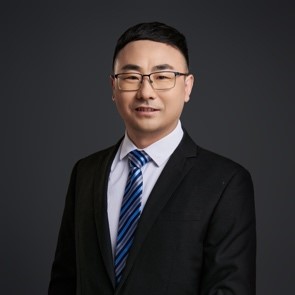
Laha Ale (Senior Member, IEEE) received the bachelor's degree in computer science from the Southwest University of Science and Technology, Mianyang, China, in 2011, the M.B.A. degree from Webster University, Webster Groves, MO, USA, in 2016, and the Ph.D. degree in geospatial computer science from Texas A&M University-Corpus Christi, Corpus Christi, TX, USA, in 2021. He was a Software Engineer with Tieto, Symantec, and Veritas in Chengdu, China, for seven years. In 2022, he joined the Center for Computational Biomedicine, Harvard University, Cambridge, MA, USA, as a Postdoctoral Research Fellow. He joined the School of Computing and Artificial Intelligence, Southwest Jiaotong University, Chengdu, China, as an Associate Professor in 2023. His research interests include mobile edge computing, agentic workflow and probabilistic programming.
As Large Language Model (LLM) agents evolve toward persistent, long-running systems, efficient memory management has become a critical challenge. Existing memory frameworks often rely on frequent LLM-based memory extraction, summarization, and consolidation, resulting in significant token consumption, computational overhead, and scalability limitations. Moreover, memory abstraction can lead to information loss, reducing retrieval accuracy and long-horizon reasoning performance. This special session focuses on novel memory architectures and retrieval algorithms that enable scalable, accurate, and resource-efficient long-term memory for LLM agents. We invite contributions addressing efficient memory construction, memory representation learning, adaptive consolidation, retrieval optimization, memory compression, continual learning, and cognitive-inspired memory systems. Topics spanning structured and graph-based memory, multi-agent memory sharing, memory-aware reasoning, and benchmark development are particularly encouraged. The goal of this session is to advance the theoretical foundations and practical deployment of persistent AI agents capable of maintaining, organizing, and utilizing knowledge over extended interactions while minimizing computational and token costs. The session will provide a forum for researchers and practitioners to discuss emerging challenges, solutions, and future directions in long-term agent memory systems.
* Long-term memory architectures for LLM agents
* Agentic memory systems and memory operating systems
* Memory construction and consolidation algorithms
* Cognitive-inspired memory models for AI agents
* Episodic, semantic, procedural, and hybrid memory systems
* Hierarchical and multi-resolution memory representations
* Structured memory graphs and knowledge networks
* Retrieval-augmented generation (RAG) for long-term memory
* Memory-aware reasoning and planning
* Efficient memory indexing and retrieval algorithms
* Memory compression, pruning, and summarization
* Continual learning and lifelong adaptation
* Personalized memory and user modeling
* Multi-agent memory sharing and collaborative memory systems
* Context management beyond finite context windows
* Memory representation learning and embedding methods
* Token-efficient memory construction strategies
* Resource-aware memory management for edge and cloud AI
* Memory benchmarking and evaluation methodologies
* Long-horizon task execution and agent persistence
* Self-organizing and self-evolving memory systems
* Knowledge accumulation and forgetting mechanisms
* Memory consistency, reliability, and trustworthiness
* Neuro-symbolic memory architectures
* Graph neural networks and graph transformers for memory retrieval
* Distributed and federated memory systems
* Memory systems for autonomous embodied agents
* Long-term conversational AI and personalization
* Human-AI collaborative memory systems
* Foundation models for memory-intensive reasoning tasks
Copyright © 2026. AIBT All rights reserved.